Emi Kimura1, Bob Whitney2, and Chris Cobos3
1Extension Agronomist and state Extension peanut specialist, Vernon, TX; 2Organic specialist, Stephenville, TX; 3Environmental Soil Scientist, Vernon, TX
Introduction
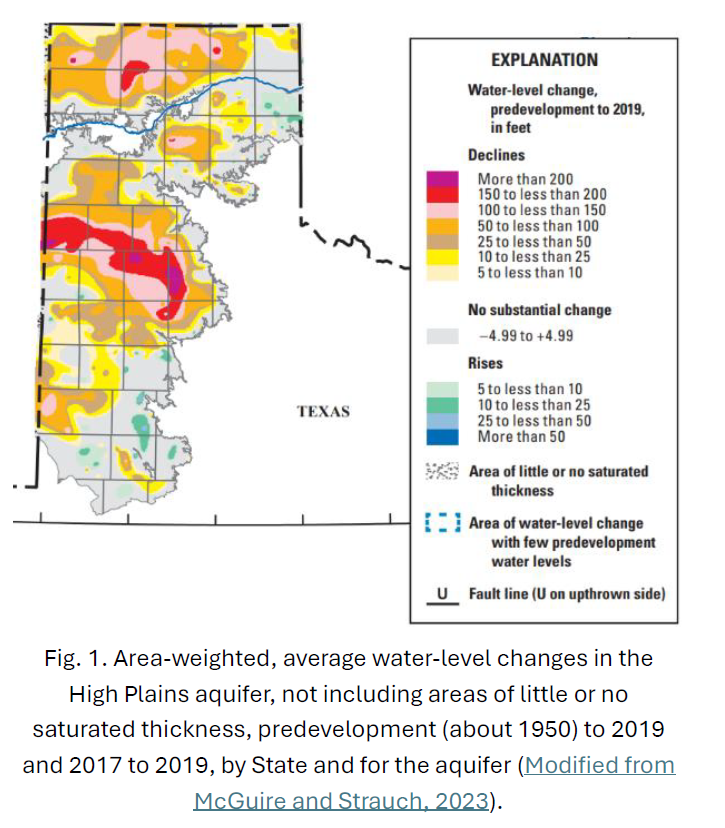
Ground water levels across the Texas High Plains have declined since predevelopment of the Ogallala Aquifer in the 1950s to 2019 (Fig. 1). As groundwater levels decline, irrigation water quality continues to decline as well. However, the majority of planted peanut acres in Texas require irrigation for optimal growth and yields. This publication summarizes the irrigation considerations for growing productive peanut crops in Texas.
Seasonal water requirements
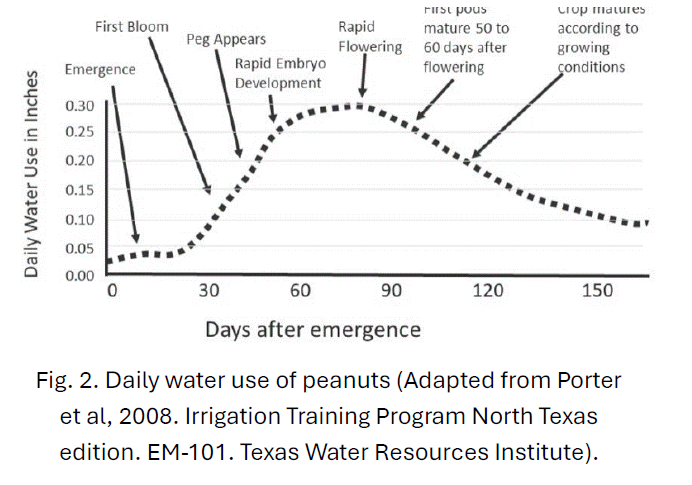
• Peanuts require 25 to 35 inches of water
throughout the growing season (May-Oct) depending on the year (Fig. 2).
• Water requirements are highest (~2 inches
per week) during the pegging, flowering, and early pod maturation, and gradually decline as the crop matures.
Well capacity
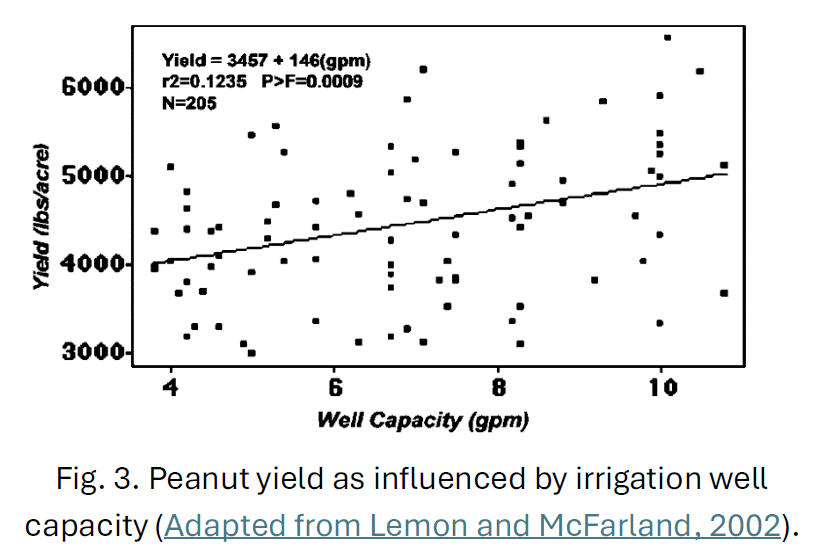
• The recommended well capacity for
peanuts is 5 gallons per minute (GPM) per acre. Yield was positively correlated with increasing well capacity (Fig. 3).
Water quality
• Boron:
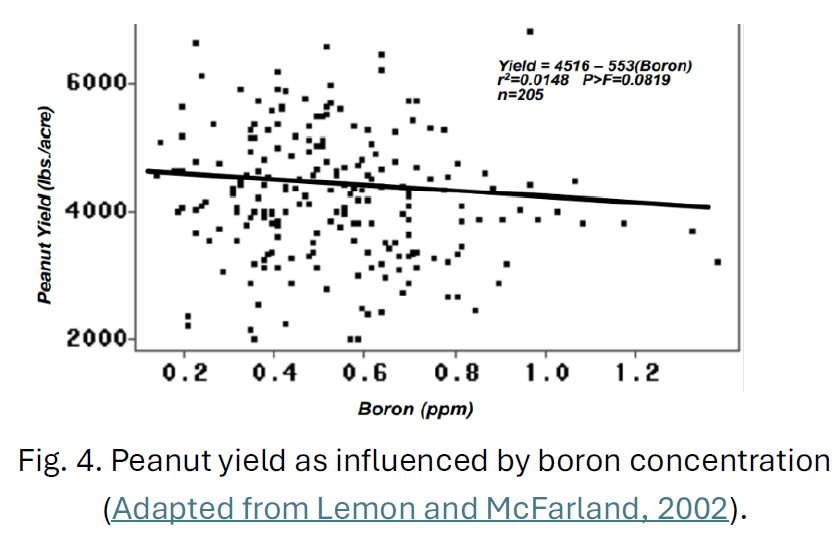
Peanut yield was negatively correlated with increasing boron concentrations (Fig. 4).
For each 0.1 mg/L increase in boron
concentration, yield was reduced by approximately 55 lbs/ac.
•Soil sodium hazard (SAR)
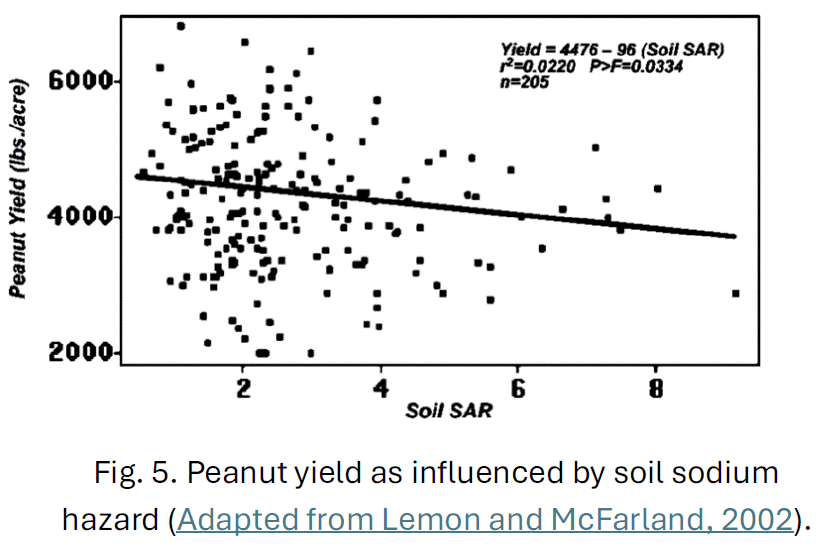
oPeanut yield was significantly reduced with increasing soil SAR (Fig. 5). For each one unit increase in SAR, peanut yield was reduced by approximately 96 lbs/ac.
•Salinity (EC):
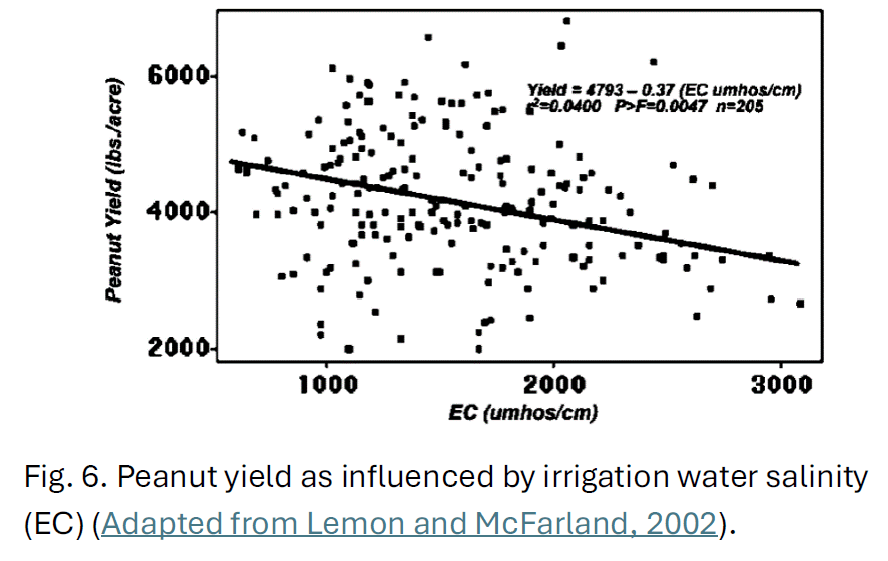
o Peanut yield was significantly reduced with increasing irrigation water salinity (EC) (Fig. 6).
Other considerations
Irrigation management should be adjusted based on the factors below.
• Evapotranspiration
Crop evapotranspiration (ETc) is the water lost from the crop surface. For example, Borrelli et al. (1998) listed that ETc for peanuts are 2.98, 5.66, 8.11, 7.96, 6.07, and 2.89 inches from May to October, respectively in Brownfield.
• Irrigation efficiency
Irrigation efficiency has climbed from an initial 60% to a current range of 88-95% across much of the state (Wagner, 2012). However, we can further improve irrigation efficiency by maintaining optimum soil fertility levels and by adjusting irrigation amounts by crop demands, using variable rate irrigation techniques.
• Water quality
Peanut yields are strongly correlated with the elements found in the water (Fig. 4-6). It is important to test the water samples from your well to make sure the water quality meets the minimum standards for growing peanuts. Water samples can be tested at Soil, Water and Forage Testing laboratory at AgriLife Extension (https://soiltesting.tamu.edu/).


Leave a Reply