
Emi Kimura (Editor), Josh McGinty (PI), and James Grichar (PI)
Funding source: Texas Peanut Producers Board/National Peanut Board
Funding year: 2023
Introduction
Everman et al. (2008) found that the critical weed free period of broadleaf weed interference in peanut was approximately eight weeks after planting, thus effective early-season control is of utmost importance for maintaining yield potential. Palmer amaranth (Amaranthus palmeri S. Wats.) emerging with the crop is capable of out-competing peanut for sunlight, water, and nutrients and is likely to produce extremely large amounts of seed if allowed to compete season-long (Mahoney et al. 2021). Burke et al (2007) found that peanut yield was decreased 28% due to season-long competition from one Palmer amaranth individual plant per meter of row.
In prior studies associated with this project, the combination of Prowl H2O, Valor, and Dual Magnum was evaluated and provided excellent weed control and a high degree of crop safety. Brake herbicide (active ingredient fluridone) is a Group 12 herbicide for preemergence control of weeds in peanut. According to label precautions, it may cause temporary bleaching, stunting, or necrosis in untested peanut cultivars.
The objective of this study was to evaluate the efficacy of PRE and PRE + postemergence (POST) herbicide programs for season-long control of key weed species and crop safety.
Materials and methods
A field study was conducted in 2023 in an irrigated peanut field near Pearsall, TX. Soil at the study site was a Duval very fine sandy loam. The trial included eighteen treatments and was arranged as a randomized complete block with three replications. Plots were two rows (38” spacing) wide by 30 ft long. The field was planted to Georgia 09B peanut on June 13, 2023. Preemergence (PRE) treatments were made the following day and included Prowl H2O at 1 qt/A either alone or in combination with Valor (2 oz/A), Dual Magnum (1.33 pt), Valor + Dual Magnum (2 or 3 oz + 1.33 pt/A), Warrant (48 oz/A), Brake (12 or 16 oz/A), or Brake + Dual Magnum (12 or 16 oz + 1.33 pt/A). Select treatments were then followed with early postemergence (EPOST) applications on July 11 of Dual Magnum + 2,4-DB (1.33 pt + 1.6 pt/A), Warrant + 2,4-DB (1.5 qt + 1.6 pt/A), or Anthem Flex (3.5 oz/A). Applications were made with a CO2 pressurized backpack sprayer with a handheld spray boom equipped with TeeJet Drift Guard 11002 spray nozzles calibrated to deliver a total spray volume of 20 (PRE) or 15 (EPOST) GPA. Environmental conditions at application are shown in Table 1 and photos of the study site are shown in Figures 1-3.
Results and Discussion
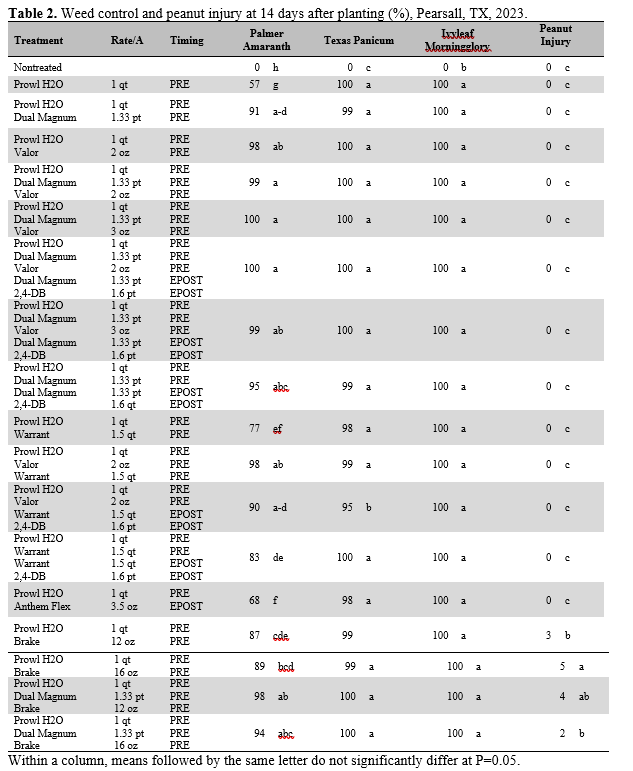
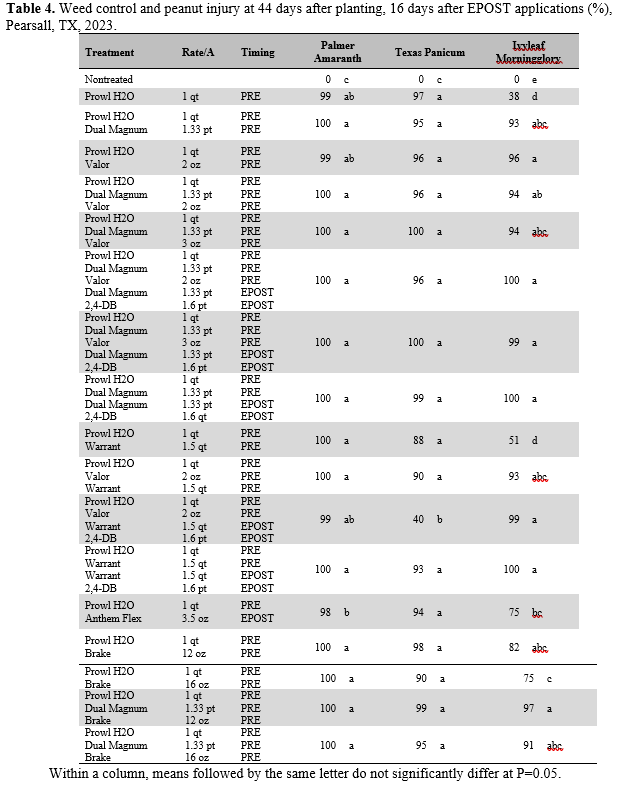
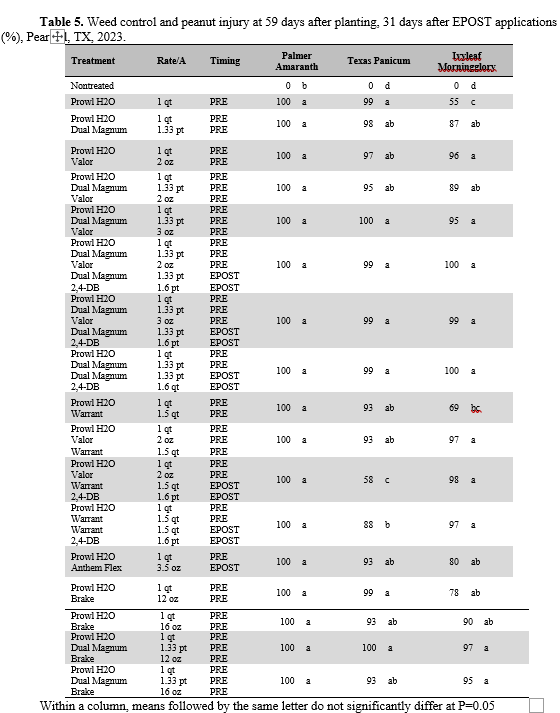
Thirteen days after the PRE applications were made, all herbicide treatments provided 98 to 100% control of Texas panicum, except for one treatment of Prowl + Valor (1 qt + 2 oz) (95%) (Table 2). Palmer amaranth control at this time was 91 to 100% with the exception of Prowl + Brake PRE (87-89%) (Figure 1), Prowl + Warrant PRE (77-83%), and Prowl H2O alone (57%). Morningglory control was excellent with all treatments. Plot treated with Brake PRE exhibited slight bleaching of peanut leaves (2-5%), while no injury was observed with any other treatment.
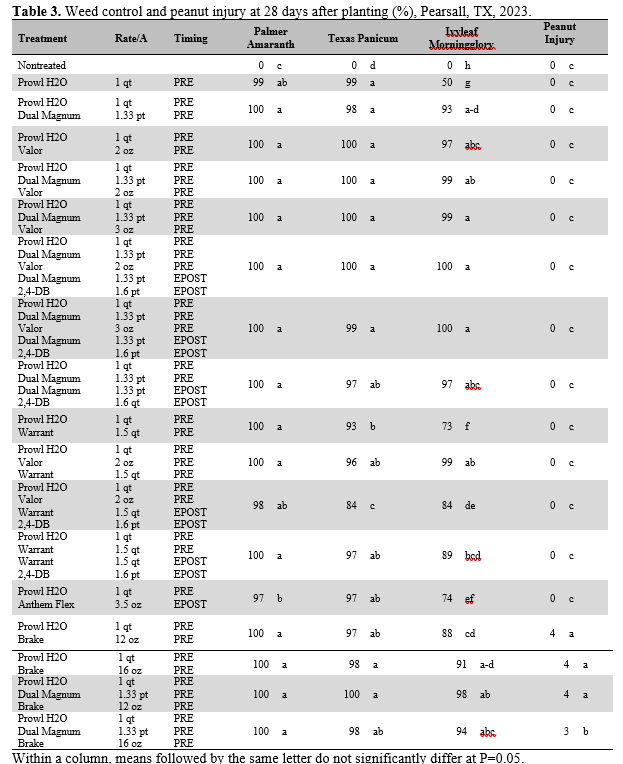
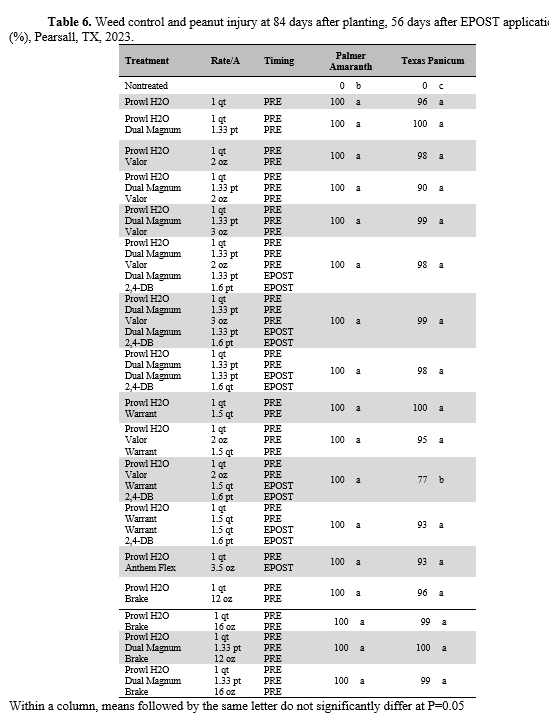
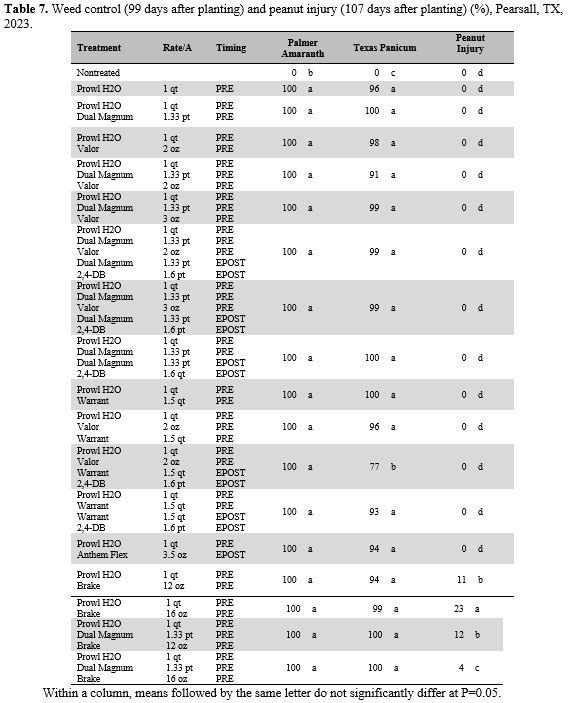
Prior to the next evaluation (28 days after planting), an overspray of Pursuit + Zidua was made to the study site, masking any treatment effect on weed control (Table 3). At this evaluation, crop injury was again noted in plots treated with Brake PRE (3-4%). Beyond this point, and until the final rating taken 107 days after planting, injury due to Brake PRE was not observed. At the final evaluation, injury was once again observed in plots treated with Brake PRE, ranging from 4 to 23% (Figure 2 and Table 7). This late-season injury was characterized by interveinal chlorosis exhibited in portions of the canopy of plots treated with Brake. In plots treated with the combination of Prowl H2O, Valor, and Dual Magnum PRE, no injury was noted for the duration of this study, similar to what was observed with these combinations in prior years of this effort.
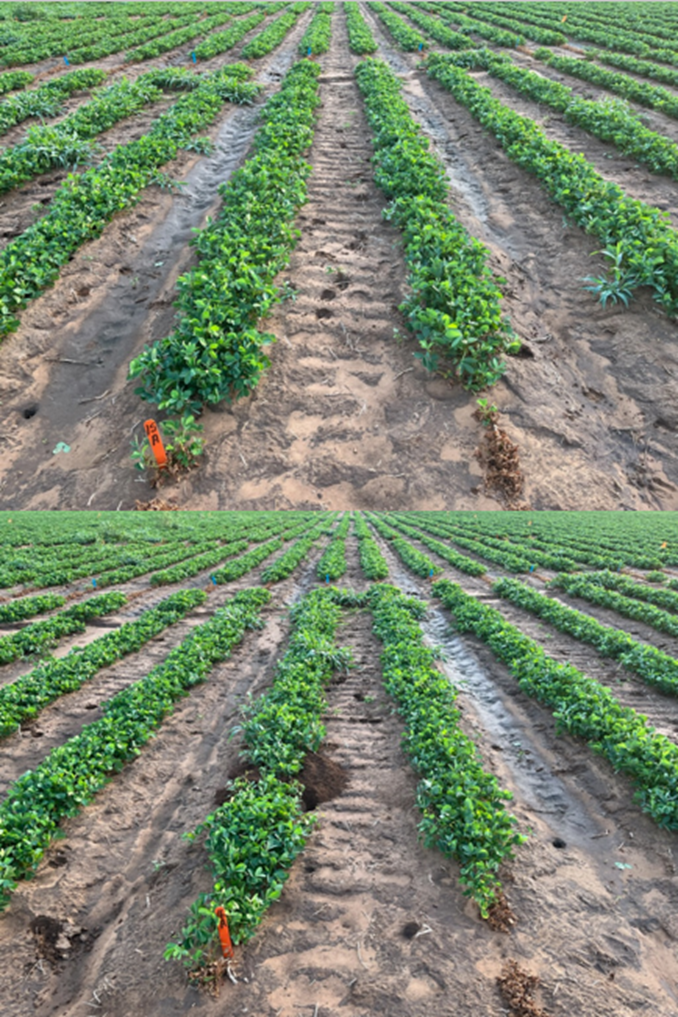
Figure 1. Prowl H2O 1 qt/A + Brake (12 oz/A above, 16 oz/A below) PRE, six weeks
after planting. Pearsall, TX, 2023.
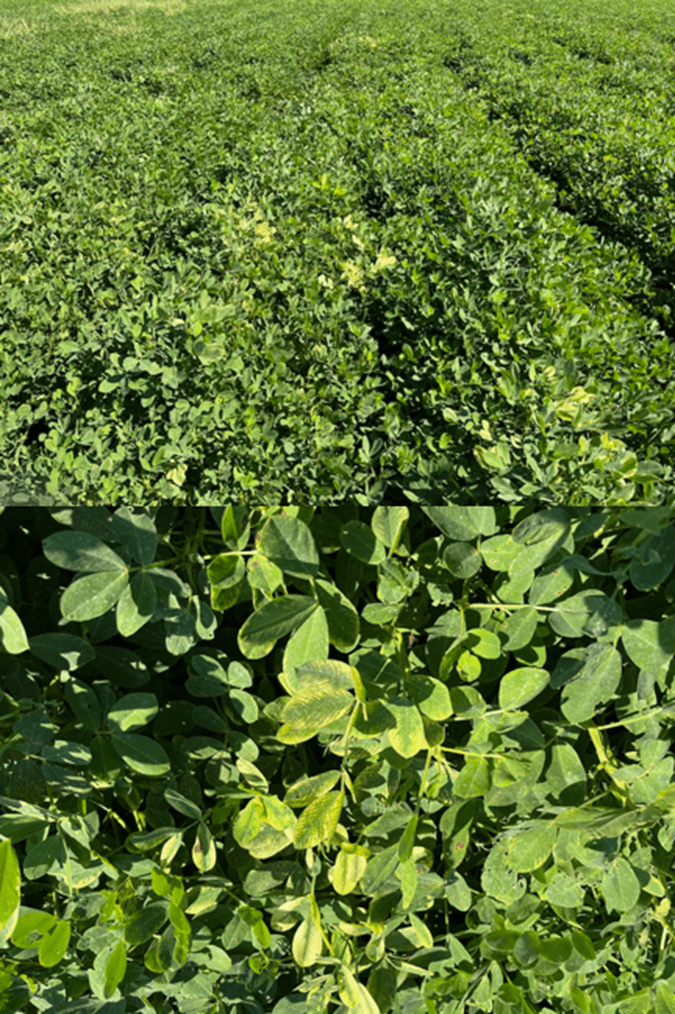
Figure 2. Late-season peanut injury in plots treated with Brake PRE. Photos taken 14 weeks after planting, Pearsall, TX, 2023.
 TEXAS A&M AGRILIFE ROLLING PLAINS AGRONOMY PROGRAM
Leave a comment